Saturday, March 7, 2015

Richie Furay: A New Understanding


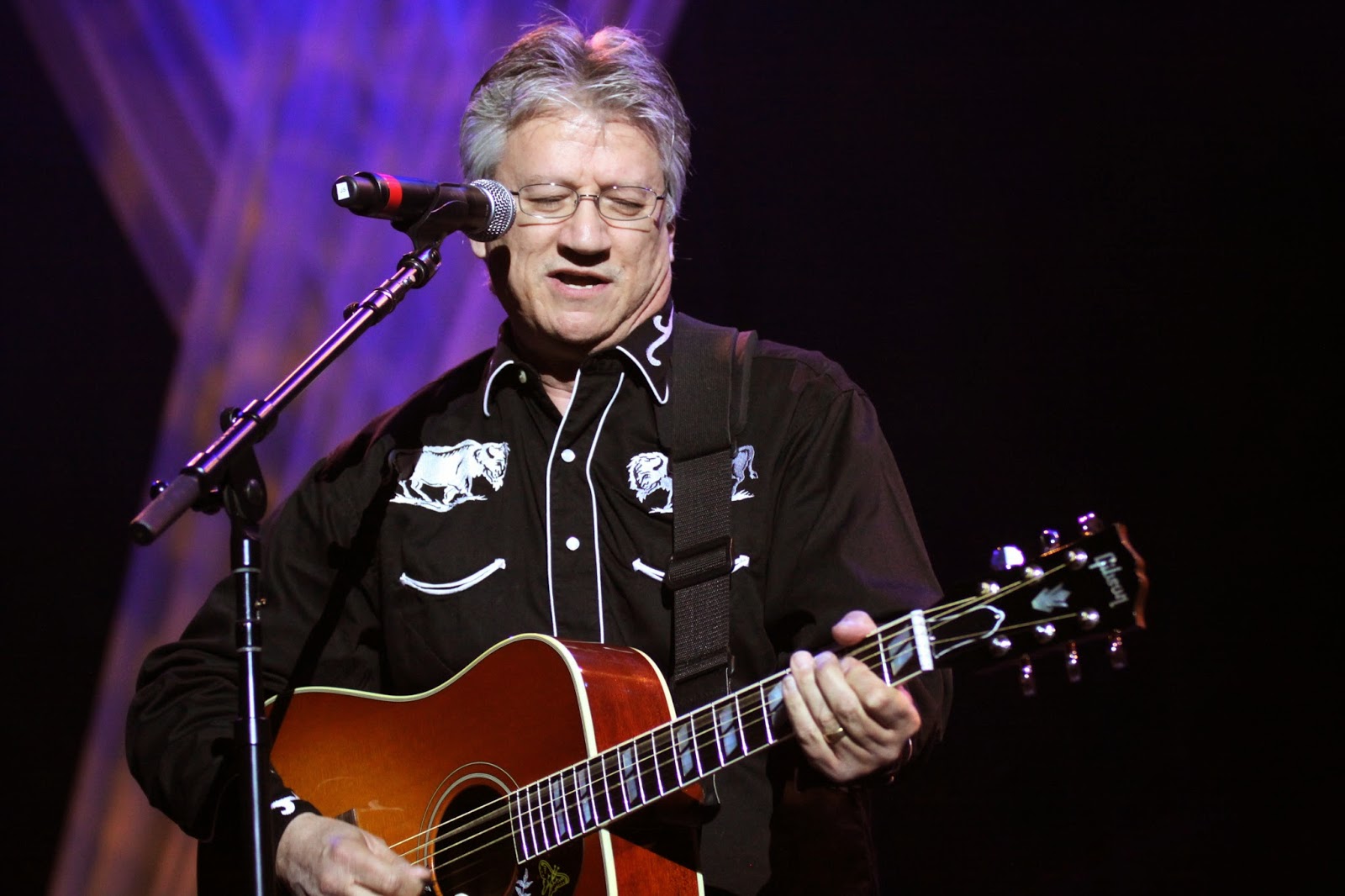
Richie Furay
photo by Shanna Lemke
 
An extraordinary gift was placed in my hands a few weeks ago, while researching the life and career of an artist whom I was about to interview. This research resulted in a profound change in perspective on a band that I thought I understood completely. Through a most unexpected manner, I had achieved a completely new way of understanding the familiar. That the medium in which this experience occurred was music struck the deepest of possible nerves, imparting a life-changing aspect to the experience, given how my mind works. Deep thoughts, perhaps, but they are as accurately as I can convey some of what has been coursing through my mind since the interview took place; here you have it!

 
The Buffalo Springfield, an integral contributor to my life’s soundtrack, was—up until a few weeks ago—projecting the dual-polarity between Stephen Stills and Neil Young to me as the main musical force in the band. Richie Furay’s contributions always stood apart as unique, even as he was masterful at the subtle art of the blend, but never before as noticeably influential to my ears since spending three weeks hyper-absorbing the sounds of his subsequent musical journey: Poco, the archetypical country-rock band Furay founded with Jim Messina and Rusty Young in 1968; the streamlined songcraft of Souther/Hillman/Furay; and a series of compelling, highly personal solo albums, beginning with 1976's I've Got a Reason, culminating in Hand in Hand, Furay's first release in eight years, due out on March 31st.

 
What I understand now about the Buffalo Springfield is this: Richie Furay was an enormous influence upon the group’s sound, equally as much as his friends Stills and Young. To the same degree, I feel that Furay’s influence upon music has been profound, yet in his unique way, masterfully subtle.

 
In addition to his music, Furay experienced a deep spiritual awakening decades ago and has been the pastor of a small Colorado church for the past 33 years. He is happily married to the same woman for nearly 50 years, has four adult daughters and nearly a dozen grandchildren, and is a member of the Rock and Roll Hall of Fame (for the Buffalo Springfield) and the Colorado Music Hall of Fame (for Poco). His new album, Hand in Hand, represents a man whose voice contains the strength of his convictions—about life, love, family, and country, richly infused with spiritual awareness.

 
Currently on tour to promote Hand in Hand, Richie Furay and his band come to New York City on March 18th for a performance that evening at City Winery. I had the opportunity to speak with Richie by phone a few days before the tour’s launch, and immensely enjoyed spending time with this friendly, unassuming, deeply spiritual soul.

 
Roy Abrams: Congratulations on the new album! I love it!

 
Richie Furay: I’m really proud of it too, man! Who would have thought that, at this age, man, I’d come up with some more songs? [laughs]

 
RA: It’s a timeless–feel collection of songs, centered on a familiar theme for you (love) but also, given its position in the track listing, non-partisan patriotism (“Don’t Tread on Me”). What was the inspiration behind this one?

 
RF: You know, Roy, I really have a love for our country. I just see us, for whatever reason—I don’t know, I don’t want to put my finger on anything that would be offensive, but I just see so many people today who are disillusioned, they’re hurting, they’re out of a job. People are just hurting, and plus we’ve got all these other entities coming in from all around the world, and it’s just … This is a great country, and I don’t like any idea of belittling this country in any way, shape, or form. Do we have flaws? Absolutely, we have flaws. There’s no doubt about it. There are things that I think we need to work on, and that’s really the thoughts behind the song. I just want people to know that we’ve got a great country here, and we should be proud of this country, and we should stand up for it in all ways that we possibly can, and try to bring some unity back to what I really see as a divisiveness in the spirit of America right now. I want to see it be unified.

 
RA: How have you reconciled your love of rock 'n' roll, which when it started was branded the Devil’s music by some, and your religious faith?

 
RF: You know, Roy, I don’t have a problem with it at all. I remember the Apostle Paul, who said, “It’s a very small thing to me that you would judge me.” Not speaking of you, but others who come from that perspective. Usually, it’s a very legalistic Christian perspective that would say [adopts outraged voice] “You can’t do that and still be a Christian!” You know what? I can, and it’s my life. The Lord has given me gifts, He’s given me talents, I think He knows my heart; He’s the one who looks on my heart to see where I’m at and what I’m doing. I want to share this gift, and I don’t think it offends Him at all that I would share my gift in a secular way as well in a way where maybe I would write a devotional song or something that is very specific toward my love for Christ. Believe me, Roy, early on after I became a Christian, people were very much throwing these kinds of things at me, and I didn’t know quite how to deal with them then. I just kept pressing on, thankful that I had some good friends who were other pastors, who said, “You just keep doing what you’re doing.” So it’s just my life. I just write songs that are about my life and there’s nothing wrong with that.

 
RA: Your love of God is reflected in your songs in a manner that strikes me as quite similar to George Harrison’s. What is your opinion of George’s faith-oriented songs?

 
RF: Well, I think that certainly we had a little different perspective on our faith, but I think he again was just expressing his life. He was expressing the things that he learned in life and he was trying to share the same things that I was sharing. You know, I’ve been really blessed in all that I’ve done. I’ve been able to see my dreams fulfilled as far as being a rock ‘n’ roll musician, and I’m still able to make music and have a great band to play the music. I’ve got a family … all of this has to be taken into consideration. My wife and I will be married 48 years on March 4th. That’s just like unheard of. I’ve got four great daughters, one of them sings with me today, and I’ve got eleven grandchildren with one on the way, I’ve got a great little church here that supports me. As I look back on my life (and as I look forward, too), it’s just like, wow, I’ve just been blessed. So I can’t really get hung up on people that would have any kind of opposition to what I’m doing. I’m sure that George Harrison felt the same way. He wrote songs about what was on his heart, and I write songs about what’s on my heart. It’s just where I’m at!


photo by Shanna Lemke


RA: Speaking of George, did you feel a Harrison-like scenario unfolding in the Springfield where the other two songwriters crowded you out, so to speak?

 
RF: You know, I didn’t think about it at the time, but certainly in years past when people have made that comparison. You’ve got these two guys (Stills and Young) who are, like you say, very prolific songwriters—they were at that time, and I think that Neil still is prolific, but I didn’t think about it at that time, you know, Here are these two guys, am I going to find a niche to be able to get a song recorded. Over the years, people have said, “You know, you’re like the George Harrison of the Springfield!” I understand what they’re trying to say, though! [laughs]

 
RA: Music journalist Terry Roland, in the May 2014 issue of Americana Music, said of your singing: “In his own unique way he is as much a soul singer as country.” It’s a statement I completely agree with. I’d like for you to talk about your singing style. Early on with the Springfield, I think what set you apart was your phrasing. In an era where many made being indecipherable their stock-in-trade, you paid such close attention to the detail of each syllable. Where did that come from? What singers influenced/inspired you?

 
RF: I’ll tell you right off the top I got a lot of that influence from Stephen (Stills). And Stephen was influenced by a guy named Tim Hardin. Tim had interesting phrasing as well. I really respected Stephen at the time, and I think it just evolved to my own style. And I am, I’m very conscientious about phrasing and how words and phrases fit together and how they flow melodically. I’m very concerned with that, even today, and I want that to be a part of my legacy, I guess, part of what really is important to me. It’s how I have a phrase that can melodically just kind of flow without feeling awkward or having a staccato to it that doesn’t belong there.


RA: With Poco, your voice seemed to get much bigger and rounder. Was it just a matter of confidence? Did you go for any vocal training? What was going on at that time?

 
RF: I agree with you and I think that over the years, even today, that it seemed to develop a sound that early on, it was an immature voice; I think it has matured. I tried, when I moved to Colorado, to take some voice lessons because I would end up losing my voice because of not singing maybe “properly.” I tried to do it, and you know, Roy, I couldn’t hang into it, you know. It seemed like they wanted to change so much about what the characteristic of my voice was, I just couldn’t adapt, and so I just kind of let it go. I like the way my voice sounds better now than it did early on in the Springfield days, and I’m not sure that everybody can say that about the way they’re singing at 70!


photo by Rebecca Sapp


RA: What do you do to keep your voice in shape? Your voice sounds so youthful. Why do you think that is?

 
RF: There’s nothing in particular that I do. It is my instrument, I’m very well aware of that. I try to take care of the best I can. When we were doing the Springfield tour, Neil was running around doing these little exercises with his voice. Timothy (Schmit), when he came out for the Colorado Music Hall of Fame show that we did, has these little exercises that he does. I know that Timothy had some serious situation with his throat which has prompted him to do this. I’ve never been able to do too many exercises. I’m like the old guy that back when we were going to school, in gym class, you didn’t do a lot of stretches, you just got out and played ball. Now, you’ve got to stretch and do all the things to prepare you, but I just hit the floor running! I’m not going to change anything right now, though!

 
RA: How was it doing those Springfield shows a few years back? It certainly seemed you were all enjoying it. Seeing the YouTube clips, it’s immediately apparent that there was a sound between the three of you that was distinct and separate from CSNY, Poco, etc., in both the vocal blend and the instrumental sound. Your three guitars never get in the way of each other. It seemed like you were just getting warmed up. How was it? Was there a possibility of working on new material?

 
RF: Well, that’s where some of my album came from, to answer your last question. I had these guitar riffs and little pieces of thoughts and ideas that were running around in my head—some of them, Roy, for years! And when the Springfield got together, I just got motivated, you know, that there’s a song here, and I have to get it out now. I started writing all of these songs because I did believe, as I think Stephen did, that there was going to be a follow-up with the shows that we did. As it turned out, we only did seven shows, and that was it. Everybody, from my perspective, had a great time doing it, and when it was over, it was over. I guess it was just the way that it was over. There wasn’t a discussion. I was put in a position during the Springfield tour that I became the spokesman because Neil wasn’t going to talk to anybody, and Stephen didn’t have time or whatever, so I was told, “Tell everybody you’re going to do thirty shows.” And so I’m the guy that got stuck out there to tell everybody that we’re going to do thirty shows after these first ones that we do, and then all of a sudden it was over. You know, that’s the way it goes. I was just as glad, because when it came time, these songs were still there, and I said, well, you know what? I’m going to record them regardless. I think they’re good songs, I think they’re strong songs, and I’m going to go and record them.

 
RA: Speaking of the Springfield, It’s unique how the Grateful Dead had the foresight to document every one of its concerts from early on, as they had a reputation of being a live band. But as great as the Springfield’s records were, you guys also had a reputation of being one of those “You have to see them live” kind of bands, and the few shows that do exist bear this out. They’re a glimpse into this whole other side to this band that we barely have any of.

 
RF: Yeah, there’s not much documented, that’s for sure!

 
RA: Didn’t anybody think, “You know, we should turn on a tape recorder!” Is there some secret treasure trove of pristine live Springfield soundboards?

 
RF: Not that I’m aware of. I don’t think it was until after the Springfield broke up that Neil really started to document everything that he did. But we certainly didn’t. It could have been because, Roy, we just weren’t really sure who was going to be in the band and when! There were (so many) people in and out of the Springfield in two years and so it was kind of a difficult situation to keep forward momentum going. So it probably wasn’t in the forefront of any of our minds at that time.

 
RA: How did you feel about David Crosby joining you at the Monterey Pop Festival?

 
RF: Well, it was nice of David to step in for Neil. That was one of the times that Neil decided that he wasn’t going to be in the band, so it was nice of David to come and kind of fill that void, and I think that started a really good friendship between him and Stephen that went on to include Graham Nash. (At) Monterey, I was kind of sick during that period of time; I had tonsillitis, and I wasn’t really 100%. I don’t look back on that experience—at least our performance—as one of the more memorable ones. I think playing at the Hollywood Bowl with the Rolling Stones would have been one of the highlights. But, you know what? I loved that period of time when Bruce (Palmer), Dewey (Martin), Stephen, Neil and I played at the Whisky a Go-Go. We were like the house band there and shared the stage with Love and with The Doors and with the Grass Roots, and different L.A. bands at the time. I think it was there that the band was the tightest and I that’s where I have some of my fondest memories. Once we left Sunset Boulevard, things began to change and it was just different.

 
RA: One more Springfield-related question: The song “It’s So Hard to Wait” from Last Time Around is a Furay/Young song, the only one. Who wrote what? Why weren’t there more collaborations?

 
RF: I think I had the idea [sings] “I just can’t seem to get movin’” and Neil came along and added just a few little parts. I think I had most of the song already written, and he kind of completed the circle, so to speak. It wasn’t something (where) we sat down and said, OK, we’re going to write a song together. It was something that I had that he heard and identified with and added his part, and I’m trying to go back even much further than that, just to think in my mind that maybe he did really contribute to it, but we certainly had that as a collaboration.

 
RA: One thing people tend not to know about is how hot a band Poco was. All one has to do is listen to Deliverin to hear what a high level of musicianship—not to mention singing—you guys are playing at, with a high level of communication. What can you tell me about being onstage with that band throughout the time you were with them and what was the main difference between playing with Paul Cotton versus Jim Messina?

 
RF: I have to look at it in the early stages, anyway, as my band. It was a band that there was a lot more of a sense of family, even though we went through a few changes, as families do go through changes, but  more so than the Springfield. Paul brought a little more rock ‘n’ roll to the overall picture, where Jimmy was very stylized. Paul had just a little more of a straight rock ‘n’ roll feel than I think Jimmy did, at least at that particular time, and that’s what we wanted to capture when Jimmy decided he was going to leave and we wanted to get another guitar player. Roy, we were feeling like we were between a rock and a hard place. We were too country for rock and too rock for country, so we had to kind of make some adjustments to where we could get accepted in our natural element and then move on from there.

 
RA: Regarding the second Poco album, was the second side all cut live ("Nobody's Fool/El Tonto de Nadie, Regresa")? It sounds like it’s recorded onstage.

 
RF: Most of it had to have been. The instrumental track laying-down was recorded right there in the studio, pretty much live. We were also a band where we kind of worked things out so we kind of knew where we were going; it wasn’t so much ad-libbing as it might sound on that particular recording, but it was done live, if you will.

 
RA: Souther/Hillman/Furay had an abundance of talent and the records hold up really well. There seemed to be lots of potential there. Your voice seemed to hit an even higher peak with them. “Believe Me” has a two octave range and you’re not even singing falsetto. [Furay chuckles] What are your memories of that band?

 
RF: I don’t know what to say. Souther/Hillman/Furay was an interesting band. It was an interesting concept. I was frustrated with Poco, not so much with the guys, but the way Poco was being accepted out in the world. The Eagles had just come out and had a big hit, we’d already been working for four or five years, trying to get a hit, and in that particular time you needed the AM radio to really move you to a higher level of places where you could play; from clubs or college campuses to some other venues that were more large theater-type places. It just seemed like Poco wasn’t going to happen, so I actually got a hold of and talked it through with David Geffen, and David’s the one who put J.D. and Chris and myself together. It was real interesting because David said, well look, I know that Chris is looking for something to do right now, and this other songwriter who writes for The Eagles, he would be a great asset for a band, so why don’t guys get together, and we’ll just put together another Crosby, Stills, and Nash? Well, that sounds good, and it looked good on paper—the musicians that we had and all. But Crosby, Stills and Nash got together because they really knew each other and enjoyed playing with each other and they were friends. When Chris and J.D. and I got together, we were acquaintances and we were just putting something together, and it was a little more difficult. We’re still friends today. I’ve done several tours with Chris and see him a lot, and I haven’t seen J.D. quite as much, but we’ve reacquainted ourselves over the last couple of years, and so it’s really a good friendship. It was something that really didn’t come from our hearts; we were just hand-picked by somebody else who thought this would be a good idea, and gave it a try, and it didn’t really work to anybody’s expectations, plus I was starting to have some things happen in my life that just didn’t quite fit in with everything else that was going on.

 
RA: To move into the present, I love the fact that you’re working with your daughter Jesse; that has to be such a gift for both of you, and I’m wondering what that relationship is like. What’s the onstage relationship like—not just between the two of you, but between your band mates?


The Richie Furay Band

 
RF: My band is so unique in that it is a multi-generational band. My lead guitar player, and the partner I write with somewhat, his son plays bass with us, so he has a son and I have a daughter who’s in the band. We have Alan (Lemke) who’s the drummer, we just added a new guy, Jack Jeckot, who Scott Sellen played with years ago, back in the Philadelphia area, but you know what, Roy? I think it gives excitement to Scott and myself that our kids are musicians that can really do (it), and they’re not full-time musicians at all; everybody has another job in our band. You know, when we step on stage, I think we can stand up and play with anybody, anywhere, anytime. They are so professional, and yet the kids bring that young, youthful vitality to the band, which I think makes it fun for Scott and myself. I know personally that if Jesse wasn’t in the band, I’d probably have more of a difficult time going out on the road now. It’s much more fun having her in the band, going out with me. Our voices, they blend so well together. On “Hand in Hand” we’re the only ones who are actually doing any of the singing. On some of the other studio projects that I’ve done since I left Souther/Hillman/Furay, I’ve had other people singing on some of the songs as well, but on this particular album or CD or whatever they call them these days, I don’t know, Jesse and I do all the vocals, and our voices just ....you can tell we’re family!

 
RA: Final question:  on your website, this phrase appears: “The God of the Bible is the God of Second Chances.”  If you had the opportunity to speak directly with each person who will eventually read this interview, how would you reinforce this message?

 
RF: That message that you just spoke to me? That’s the heart and soul of my life. He gave me a second chance. My wife and I, we were on the verge of divorce, we were on the verge of seven years of it being all over. Jesus came in, and basically we surrendered our lives to Him. And He, in turn, has given us a life that both of us are so satisfied (with) and so thankful for because it’s not only a hope that we have for this life but it’s a hope that we have for the life to come. That’s what the Bible teaches. We’re 100% on board with that, and just thankful that the Lord is so gracious and so forgiving that He would give us our lives back, and a family, and the opportunity to do what we love to do the most.

RA: Amen to that!

- Roy Abrams
  Long Island, NY


Monday, February 16, 2015

Best of 2014: Personal Picks


Here we are in 2015 … a year that my students describe with wide-eyed wonder as being “as close to 2030 as it is to 2000!” With the new year halfway into its second month, temperatures hovering a few degrees above zero, and the first full day of winter break, what better time to look back at the past year with some personal remembrances and opinions as to the Best of 2014?
For this lifetime fan, hearing the first solo release from David Crosby in 21 years was an electrifying experience. Now in his early 70s, the former Byrd and founding member of Crosby, Stills, Nash (and Young) sounds as if he’s found his personal Fountain of Youth and has drunk deeply from it. His February 1 performance at City Winery in NYC was, to coin a favorite phrase of the artist’s, a stunner. His two-set concert included many selections from the new album, Croz, as well as a sampling of Crosby classics from all eras of his career. For the album, the concert, and for just being here, David Crosby earns my vote as one of the Best of 2014.

David Crosby

 
On a local note, singer/songwriter Cass Dillon reemerged onto the scene after a lengthy hiatus spent exploring the world of screen and stage acting. Dillon is an artist whose innate sense of melody and finely-honed songwriting craftsmanship results in ear-catching tunes that are refreshing to listen to, and bears testament to an individual who is, in my opinion, more than ready to step into the national spotlight. For everything he brings to the table, Cass Dillon earns my vote as Best Singer-Songwriter of 2014.

 
Keeping it local for the next entry, The Little Red Men are a group of teenagers whose brand-new EP, Off Guard, leaves no doubt as to the level of talent this band possesses. The three-song CD has taken up residence in my car since receiving it a few weeks ago and It seems that I cannot get enough listening in. Vocalist/rhythm guitarist Brandon Gurba stakes the band to superior material with his finely developed writing skills; lead guitarist Nick Granelle is a wunderkind on the instrument whose sense of melody, tone, timing, and placement is perfectly suited to the songs. The rhythm section of bassist Andrew Golub and drummer Jordan Godfrey is a musical match that reveals just how much these two are in perfect sync with each other. They also know exactly how to give the song what it needs. The Little Red Men earn my vote as Best New Band of 2014.

The Little Red Men
 
In the Best of 2014 event category, Crosby, Stills and Nash receive two votes for their moderated talk at the Paley Center for Media on July 7, followed four nights later by a stellar performance at the Beacon Theatre.

Crosby, Stills and Nash at the Paley Center for Media
July 7, 2014
photo by Roy Abrams


Crosby, Stills and Nash at the Beacon Theatre
July 11, 2014
photo by Roy Abrams


One night after CSN’s Beacon Theatre concert, YES took the stage at the NYCB Theatre at Westbury for a triumphant appearance that saw the band, featuring original members Chris Squire, Steve Howe, and Alan White, perform material from Close to the Edge and Fragile, two of their best-loved albums, as well as a few other "greatest hits" and a selection from their latest release, Heaven and Earth.  Although I missed the presences of original vocalist Jon Anderson and keyboard wizard Rick Wakeman, vocalist Jon Davison captured the magic and delivered it with spine-chilling accuracy while Geoff Downes handled the keys with confidence. At several points during this concert, tears of unmitigated joy sprang to my eyes as the band brought these studio recordings to life in a manner which can only be described as awe-inspiring ... another Best of 2014 event!


YES at NYCB Theatre at Westbury
July 12, 2014
photo by Roy Abrams
 
Four days after that, James Taylor took the stage at the Jones Beach Theatre for an evening that, once again, proved Taylor to rank among America’s finest singer-songwriters. He is a truly timeless artist whose concert ranks among my Best of 2014.
Another amazing July event was the Great South Bay Music Festival. Three days of live music from both national headliners and local artists made this a music enthusiast’s paradise. Looking forward to the next one! (The Little Red Men have already been booked to perform in 2015.)
In August, a local event took place at Club Revolution in Amityville that bears recounting in full.
What follows is a previously-unpublished review of the concert, written while I was still in a state of near-euphoria over what I just witnessed:
It would not have been out of place had Rod Serling been working the door of Club Revolution at the recent Pop Conspiracy Productions reunion concert on August 15, 2014. Iridesense and Early Edison, two of the three original bands who performed on this night, were joined on the bill by Gerald Bair, one of the Island’s preeminent singer-songwriters. This writer was powerfully reminded that, as once was, Long Island is still home to some of the best original music to be found anywhere. Never mind that all of the performers were either moving into or comfortably settled into middle age, what mattered here was the energy level in the room, undiminished by time, along with the realization that the music still mattered to both musicians and their audience.
Walking into the venue with my stepson Eric, a frequent companion in all things musical, as my eyes adjusted from the setting summer sun outside to the dimly-lit stage area, I stared open-mouthed as a familiar figure stood onstage, preparing for his sound check: Gerald Bair, a Long Island original music mainstay for decades, an artist about whom I have written extensively in the past, and one of the truly nicest people I have met in my travels. I had not seen Bair in more than a decade, and the prospect of hearing him perform again made me smile with anticipation. Chatting with him prior to his opening set, I learned that his musical legacy was bearing incredible fruit in the form of his son Matt, who is better known as Matthew Koma, now one of the leading figures in the EDM genre. Koma recently shared the bill with Maroon 5 as part of the recent iTunes Festival. His father glowed with pride and love as he told me about his son’s expanding musical career. It is a testament to Bair’s nature that he bears not a twinge of bitterness at the almost Shakespearean way in which fame found his offspring while passing him by in the process. In any event, Bair’s opening set perfectly set the tone for the evening. Armed only with an acoustic guitar, the songwriter’s solid sense of craft captivated the audience’s attention with songs from 1993’s Pieces of the Puzzle and 1998’s We All Fall Down. Bair reeled the audience in with his imagery-laden lyrics and hook-laden melodies and I was reminded once again of why I regard him as one of Long Island’s best.
Up next was Iridesense, lead by the brother-sister team of Rick Eberle and Tara Eberle-Drouin. Comprised of Rick on vocals and rhythm guitar, Tara on vocals and bass guitar, Rob Viccari on lead guitar, and Rich Drouin on drums, the band has worked together since 1993. Rick was still in his teens when I originally crossed paths with the band back in the ‘90s. I had heard some new material that the band had recorded in the not–too-distant past and was highly impressed by the quality of both songwriting and performance. Real radio-ready songs, I thought, instantly zapping back into The Island Zone radio show mode. Performing a ten-song set of songs both old and new, the crowd roared its approval as favorite songs were delivered with an energy equal to that of the first Pop Conspiracy Productions concert back at Mulcahy’s in Wantagh in the late ‘90s. Tasteful musicians who know how to focus on what works best for the song, the music coalesced most powerfully on “Life”, a song that encapsulates all that is unique about Iridesense. The audience reaction was overwhelmingly positive for every other track: “The Line”, “Don’t Say”, “My Revelation”, “Mind Control Society”, “Next to You”, “Believe”, “Negativity”, “Dangerous”, and the set closer, “Holiday”. The members of Iridesense prove that it’s possible to retain musical chemistry over an extended period of time without diluting the mixture one iota.
The frenetically-charged Early Edison took the stage last for a romp through its collection of high energy pop/rock tunes that saw founding members Tom Ashton and Rob Coffin at their “demographically-pleasing” best. (The song of that name was awarded “Pop Song of the Year” by Newsday in 1997.) Again, I could imagine Rod Serling lurking stage right, squinting out through a cloud of cigarette smoke at an audience caught in a Twilight Zone between the late ‘90s and today.
Although the turnout was a fraction of the original event, the Pop Conspiracy Productions reunion concert was an unqualified success on an entertainment level and served as a powerful reminder that great original music is alive and well on Long Island, thanks to great original artists.
My final vote for Best of 2014 goes to ex-Genesis guitarist Steve Hackett, who brought his Genesis Extended Tour to The Space at Westbury on November 15. The only former member of Genesis who is keeping his band’s music alive for its fans, Hackett and company performed to an ecstatic audience whose emotion was barely contained throughout the concert. Performing classics such as "Dance on a Volcano," "Squonk," "Dancing With the Moonlit Knight," "Fly On a Windshield," "Broadway Melody of 1974," "The Return of the Giant Hogweed," "The Fountain of Salmacis," "The Musical Box," "I Know What I Like (In Your Wardrobe)," "Horizons," "Lilywhite Lilith," "The Knife," "Supper's Ready," "Watcher of the Skies," and "Los Endos," Hackett was clearly enjoying himself, celebrating the music of a band whom many consider to be one of the world's best.
Steve Hackett and band at The Space at Westbury
November 15, 2014
photo by Roy Abrams

Steve Hackett at The Space at Westbury
November 15, 2014
photo by Roy Abrams

 
Looking ahead to the remainder of 2015, Island Zone Update will continue to shine a spotlight on the very best that musical artists have to offer … count on it!
 
- Roy Abrams
  Long Island, NY

Saturday, February 7, 2015

An Important Anniversary

Today marks the 51st anniversary of Pan Am flight 101 touching down at JFK International Airport. after its transatlantic journey from London. The screams that heralded the arrival of The Beatles in America were destined to reverberate throughout the world for the next three years, during which the Fab Four set continuous new standards of songwriting and recording wizardry. Their impact upon modern music and culture was and remains profound, influencing generation upon generation of aspiring musicians and songwriters, bringing joy to millions of fans around the globe. It is a testament to the timelessness of their music that The Beatles remain a vibrant and vital force in our collective consciousness in 2015. To the memories of John Lennon and George Harrison, the perpetually-touring Paul McCartney, and the newly-inducted member of the Rock 'n' Roll Hall of Fame Ringo Starr, infinite thanks for a lifetime of musical magic!

"And in the end, the love you take is equal to the love you make."


- Roy Abrams
  Long Island, NY


Monday, January 19, 2015

Joe Bonamassa: A Different Kind of Bluesman


photo by Rhonda Pierce
 
At 37, Joe Bonamassa has already spent a quarter century establishing him as one of the greatest blues guitarists America has ever produced. With his new album, Different Shades of Blue, Bonamassa is riding a seemingly never-ending wave of success, beginning with his discovery at the tender age of 12 by the legendary B.B. King. Different Shades of Blue features all original material, which Bonamassa co-wrote with master songwriters Jonathan Cain (Journey), James House (Diamond Rio, Dwight Yoakam, Martina McBride), Jerry Flowers (Keith Urban), Gary Nicholson (Toby Keith), and Jeffrey Steele (Rascal Flatts, Tim McGraw). Renowned producer Kevin Shirley (Black Crowes, Aerosmith, Led Zeppelin) has been with Bonamassa for the artist’s past fifteen projects. Of this latest collaboration, Shirley says, “It’s definitely my favorite Joe Bonamassa record to date. It’s an album that deserves to be listened to in its entirety. Luckily Joe’s fan base really seems to appreciate a body of work and not just songs.”


Keeping a relentless touring schedule, Bonamassa continues to expand his fan base, gaining the respect and admiration of new listeners around the world. His charting record speaks for itself: Bonamassa now has more Number One Billboard Blues albums than any other artist. Bonamassa’s success is all the more remarkable because he has achieved it on his own terms, maintaining his devotion to the music and his fans while preserving his integrity as an artist.  


Not only does Joe Bonamassa remain committed to the music which has inspired him since childhood, he also focuses his efforts toward ensuring that young people continue to have music programs available to them in school. His Keeping the Blues Alive organization has already helped more than 20,000 students across the country. A music festival cruise planned for February is the next in a series of fundraisers for the program.


Currently in rehearsal for his much-anticipated performances at Radio City Music Hall on January 23rd and 24th, the bluesman graciously took the time to answer a handful of questions about his extraordinary journey.


Roy Abrams: You've been described as "the hardest working man in show business." What drives you?


Joe Bonamassa: You get a lot of motivation when someone tells you that you can’t do what you want to do. I was always a hard worker but the moment we got dropped from Sony, Roy Weisman (my manager and business partner) and I decided we were going to do this ourselves. That really lit a fire and we’ve been determined to prove the naysayers wrong ever since. I’ve also never had a plan B. I started playing professionally 25 years ago and it’s always been what I’ve wanted to do. And I always say I’m one of the luckiest cats in the world because I get to do what I love for a living. 


RA: You've stated your devotion to the genre by declaring that your desire is not to outplay Clapton or Hendrix but to keep organic music alive. Can you elaborate on this? Also, how do you characterize the current musical landscape from a creative standpoint?


JB: I really want to make sure organic music—as in made by human beings—has a voice. I’m starting to see too many computer screens on stage. I don’t ever plan to make music like that. I think organic music, roots music is important and I want to do my part to make sure it sticks around. It’s one of the reasons I recently pared down my rig. I now play exclusively on stage with vintage amps and guitars—all from 1965 or earlier. I’m plugging straight in and playing which is a really organic and honest way of playing. No bells and whistles.  

RA: In another interview, you talked about your perception that artists such as the Black Keys and Jack White have succeeded in connecting with a younger audience while you feel that you have failed to do so. Your perspective on this differs from reality if one examines the demographics of your audience. How do you account for the apparent disconnect?


JB: I’m a family friendly kind of guy. Most of my audience is 40+ and often they’ll bring their kids. My music seems to resonate most with that group. I think the Black Keys and Jack White and Gary Clark, Jr. have really hit a chord with kids in their 20s and 30s. I just love that all these people, whether they realize it or not, are listening to and loving the blues. I think the genre is actually in a really healthy place right now.

RA: For the new album, can you talk about the marathon songwriting sessions in Nashville, what each co-writer brought to the table, and how these partnerships arose?

 
JB: For this album I needed to do something different and Kevin Shirley (my producer) suggested I write all original songs. It’s something I hadn’t done before and something we both knew the fans would love. I’m not a songwriter. I can write but I needed people who know about song craft and song structure. So Kevin suggested we go to Nashville and hook up with writers. I already knew Jerry Flowers, I knew Jonathan Cain, I’d met James House; I didn’t know Gary Nicholson or Jeffrey Steele before meeting them in Nashville. There’s a real artistry and craft to songwriting—knowing when to add a chorus or a bridge—and all these guys are master songwriters. And they’re all deep lyricists, great with words and really soulful writers. I learned so much from each of them.

RA: Revisiting the early days of your career, are there any memorable Utica stories where you realized that life was irrevocably changing for you?


JB: When I was 12, I had my own band called Smokin’ Joe Bonamassa. We played clubs in upstate New York—around Utica and Buffalo and in some cities in Pennsylvania. We played on the weekends because I had school during the week and my mom didn’t want me out late on a school night. I think the moment I was asked to open for B.B. King in 1989 was the moment I felt things start to change. We played to about 5,000 people—by far the biggest crowd I’d played to in my life at that point. I played about 20 shows with B.B. that summer and, when I looked at him and watched him play, I knew that was exactly how I wanted to live my life. 


photo by Rhonda Pierce


RA: Can you discuss the influences that
Jethro Tull and Genesis had upon you in the respective forms of Tull guitarists Martin Barre and Mick Abrahams and Genesis guitarist Steve Hackett?


JB: Martin and Mick were big influences for me. I really dug Martin Barre’s playing. Jethro Tull is one of my favorite bands and Stand Up is one of my favorite blues albums of all time. It was Tull’s first record after Mick Abrahams departed. Mick's a fantastic guitarist. I loved his band Blodwyn Pig’s 1970 record Getting to This. Steve Hackett, he’s an amazing guitarist, with Genesis and solo. I often like to practice things that are outside my normal sphere of playing whether that’s picking up a mandolin or practicing prog rock. We used to play Genesis’ “Los Endos” from the record A Trick of the Tail during shows.


RA: You’ve said that the English interpretation of the blues hit you a lot better than traditional blues. How so? (It’s an interesting statement that recalls how the early Beatles’ interpretations of American R&R, R&B, and C&W songs hit American audiences “better” than the original versions.)


JB: When I first started buying records as a kid, I liked the guys that rocked louder, heavier and faster. And that came in the form of the English and Irish cats like Eric Clapton, the Jeff Beck Group, Free, Led Zeppelin, Gary Moore, and Rory Gallagher. I was enthralled with this interpretation of the blues and I subsequently went back and discovered the masters. But ultimately it boiled down to that was the kind of music I really wanted to play.

RA: As an educator, I am most impressed with your commitment to young people through your work with the Keeping the Blues Alive program.  Can you talk about what lead to its formation, its goals and activities, and the upcoming Keeping the Blues Alive at Sea cruise?


JB: I wanted to give back and a big thing I’ve been seeing lately is that arts programs in schools across the country are getting cut. The schools don’t have the money they need for books or classes and it’s the first thing to go. We donate instruments and help fund programs and scholarships for students and teachers. Or we get companies like Ernie Ball to send guitar strings. We do this for schools across the country, in every state. Keeping the Blues Alive at Sea is our first cruise and it will benefit KTBA. We have some great bands coming with us like John Hiatt, Robben Ford, Robert Randolph and the Family Band, Ana Popovic, Joanne Shaw Taylor, and others. It’s our first cruise and hopefully not our last!


RA: Your approach to your career, from your preferred recording techniques to the indie label/management company you've been with for 25 years, is very refreshing and has proven that one doesn't have to “play the game” by industry “rules” and expectations in order to establish a successful, long-term career in this field. How do you view the music industry and your relationship to it?


JB: Necessity is the mother of invention. The inspiration came with Sony calling to say they were going to drop us from the label. It was at that moment that all of this started. We (Roy and I) just could not leave everything we’d worked so hard for and this vision and our goal to die. And we couldn’t trust it in the hands of other people either. So we started J&R Adventures—our own label, management, booking, and promotion business—and what we figured out quickly is that when you own it, you can be very nimble and make decisions much quicker and much easier than under a slow-moving behemoth record label. Having that freedom and flexibility allows you to make decisions that are good for you as an artist and as a business. 


At this point, the music industry is an antiquated business model. All the major labels are looking for is the next big pop act. They don’t give young musicians a chance. But the message I want to send to those young musicians is that you can do it on your own. Record a song; put it on social media, book a show. Get your music out there and you got your own business! You own it and you’re in control. Musicians just have to put the music out there in any way we can. And the Internet is a big part of that.


RA: Given your ever-growing list of accomplishments, with all releases since 2006 reaching #1 on the Billboard Blues chart (
13 #1 Blues albums to date!), to the new album debuting at #8 on Billboard's Top 200, from your perspective, how do you describe it all?


JB: It’s been amazing. I’m just a blues boy from upstate New York who loves to play the guitar. I never imagined the music would be embraced like it has and I feel truly blessed to have all the unbelievable support from the fans who make all this possible. With each record or ticket they buy, they help us fund the next album. We wouldn’t be able to do any of this without them.  


photo by Rick Gould


RA: How is 2015 shaping up as far as touring plans are concerned?


JB: We’ll be touring amphitheaters in the U.S. this summer with a new tribute show! I can’t say yet what we’re tributing but just think of three crowns. (That would be Albert, B.B., and Freddie King – RA)


RA: Final question: Any thoughts on the upcoming Radio City Music Hall shows?

 
JB: I’m very honored to be playing Radio City Music Hall and I think it’s one of the greatest honors any performer could ever achieve. I want to play these shows like I would any other show. Give the fans 110% and have people walking out and saying it was one of the best shows they’ve ever seen. That’s always my goal.
 

© 2015 by Roy Abrams